Buy procement.eu ?
We are moving the project
procement.eu .
Are you interested in purchasing the domain
procement.eu ?
domain@kv-gmbh.de · 0541-91531010
Buy procement.eu ?
What are harmonic oscillations?
Harmonic oscillations are repetitive back-and-forth movements or vibrations that follow a specific pattern. They are characterized by a sinusoidal or wave-like motion, where the displacement of the oscillating object from its equilibrium position is proportional to the restoring force acting on it. Examples of harmonic oscillations include the swinging of a pendulum, the motion of a mass-spring system, and the vibrations of a guitar string. These oscillations are important in many areas of physics and engineering, as they can be used to describe and analyze various natural and mechanical systems. **
What are resonance-driven oscillations?
Resonance-driven oscillations occur when a system is subjected to an external force at its natural frequency, causing it to oscillate with increasing amplitude. This phenomenon is known as resonance, where the energy of the external force is transferred efficiently to the system, leading to large oscillations. Resonance-driven oscillations can be observed in various systems, such as mechanical, electrical, and acoustic systems, and are important in understanding the behavior of these systems under different conditions. **


Similar search terms for Oscillations
Top-Angebote
Products related to Oscillations:
-
Discount Dollar Deals Dental X Ray Film Plastic Snap Radiograph Holder Clip, High Quality Dental Equipment Tools, Dentistry Lab Consumables Dental X Ray Film Plastic Snap Radiograph Holder Clip, High Quality Dental Equipment Tools, Dentistry Lab ConsumablProfessional Precision You Can Trust If accuracy matters in your practice, the Dental X Ray Film Plastic Snap Radiograph Holder Clip High Quality Dental Equipment Tools Dentistry Lab Consumables Blue delivers reliable positioning every time....44,97 $*Shipping: 0,00 $Secure redirect to the provider
-
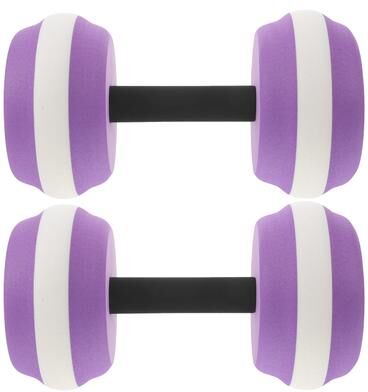
On Spot Shop EVA Dumbbells On Water Pool Ankle Weights For Exercise Bubble Swim Equipment, Swimming Exercises Tools For Aqua Aerobic EVA Dumbbells On Water Pool Ankle Weights For Exercise Bubble Swim Equipment, Swimming Exercises Tools For Aqua AerobicEnhance Your Water Workouts with EVA Swimming Exercise Tools Take your aquatic training to the next level with Dumbbells on Water Pool Ankle Weights for Exercise Bubble Swim Equipment EVA Swimming Exercises Tools. Designed for resistance training in...38,97 $*Shipping: 0,00 $Secure redirect to the provider
-
All Categories Goods Natural Soy Wax Flakes Candle Making Kit With Wicks And Centering Tools For DIY Candle Making Supplies Natural Soy Wax Flakes Candle Making Kit With Wicks And Centering Tools For DIY Candle Making SuppliesLet creativity fill your space with warm light and soothing aromas. This complete candle making kit gives beginners and hobbyists everything they need to craft beautiful homemade candles with ease. Made with premium soy wax flakes, the kit helps you...199,97 $*Shipping: 0,00 $Secure redirect to the provider



-
How do damped oscillations work?
Damped oscillations occur when an external force or frictional resistance acts upon a vibrating system, causing the amplitude of the oscillations to decrease over time. This damping effect gradually reduces the energy of the system, resulting in the oscillations eventually coming to a stop. The rate at which the oscillations decay is determined by the damping coefficient, with higher damping leading to faster decay. Damped oscillations are commonly observed in various systems, such as springs and pendulums, where energy is gradually dissipated due to external factors. **
-
How do you draw oscillations?
To draw oscillations, you can start by plotting a sinusoidal function on a graph. The function can be in the form of y = A*sin(Bx + C) or y = A*cos(Bx + C), where A is the amplitude, B is the frequency, and C is the phase shift. You can then plot the points on the graph by plugging in different values of x to see how the function oscillates. Additionally, you can use a ruler to connect the points to create a smooth oscillation curve. **
-
What are examples of damped oscillations?
Examples of damped oscillations include a swinging pendulum in a viscous fluid, a car's suspension system responding to bumps on the road, and the motion of a spring-mass system with air resistance. In each case, the oscillations gradually decrease in amplitude over time due to the dissipative forces present, such as friction or air resistance. The damping effect causes the system to eventually come to rest at its equilibrium position. **
-
How can sinusoidal oscillations be modeled?
Sinusoidal oscillations can be modeled using mathematical equations that describe the amplitude, frequency, and phase of the oscillation. The most common way to model sinusoidal oscillations is through a sine or cosine function, such as y = A*sin(2πft + φ), where A is the amplitude, f is the frequency, t is the time, and φ is the phase shift. By adjusting these parameters, we can accurately represent the behavior of sinusoidal oscillations in various systems and phenomena. Additionally, sinusoidal oscillations can also be modeled using differential equations in the context of dynamic systems analysis. **

What are the trigonometric functions in oscillations?
In oscillations, the trigonometric functions commonly used are sine and cosine functions. These functions describe the relationship between the angle of rotation and the position of an object undergoing oscillatory motion. The sine function represents the vertical component of the motion, while the cosine function represents the horizontal component. By using these trigonometric functions, we can analyze and predict the behavior of oscillatory systems. **
Does a wave consist of multiple oscillations?
Yes, a wave consists of multiple oscillations. In physics, a wave is a disturbance that travels through a medium, transferring energy without transferring matter. This disturbance causes particles in the medium to oscillate back and forth, creating a pattern of repeated motion. Therefore, a wave is made up of multiple oscillations as it propagates through the medium. **
Top-Angebote
Products related to Oscillations:
-
On Spot Shop Pure Natural Granular Beeswax, DIY Candle Making Supplies, Handmade Scented Wax, Raw Materials For Craft white BeeswaxUnlock the pure, natural essence of the hive with our Premium Granular Beeswax. Sourced for the discerning crafter, this versatile beeswax is your allinone raw material for creating breathtaking, handmade projects. Unlike synthetic waxes, our 100%...44,97 $*Shipping: 0,00 $Secure redirect to the provider
-
Tools, Home & Hobby Balance Board Wobble Board Trainer For Adults Wooden Core Workout Equipment Balance Board Wobble Board Trainer For Adults Wooden Core Workout EquipmentBuild strength, improve stability, and bring more movement into your daily routine with a versatile balance training tool designed for every fitness level. This premium wooden balance board helps adults enhance core strength, coordination, posture,...149,97 $*Shipping: 0,00 $Secure redirect to the provider
-
Discount Dollar Deals Dental X Ray Film Plastic Snap Radiograph Holder Clip, High Quality Dental Equipment Tools, Dentistry Lab Consumables Dental X Ray Film Plastic Snap Radiograph Holder Clip, High Quality Dental Equipment Tools, Dentistry Lab ConsumablProfessional Precision You Can Trust If accuracy matters in your practice, the Dental X Ray Film Plastic Snap Radiograph Holder Clip High Quality Dental Equipment Tools Dentistry Lab Consumables Blue delivers reliable positioning every time....44,97 $*Shipping: 0,00 $Secure redirect to the provider
-
What are harmonic oscillations?
Harmonic oscillations are repetitive back-and-forth movements or vibrations that follow a specific pattern. They are characterized by a sinusoidal or wave-like motion, where the displacement of the oscillating object from its equilibrium position is proportional to the restoring force acting on it. Examples of harmonic oscillations include the swinging of a pendulum, the motion of a mass-spring system, and the vibrations of a guitar string. These oscillations are important in many areas of physics and engineering, as they can be used to describe and analyze various natural and mechanical systems. **
-
What are resonance-driven oscillations?
Resonance-driven oscillations occur when a system is subjected to an external force at its natural frequency, causing it to oscillate with increasing amplitude. This phenomenon is known as resonance, where the energy of the external force is transferred efficiently to the system, leading to large oscillations. Resonance-driven oscillations can be observed in various systems, such as mechanical, electrical, and acoustic systems, and are important in understanding the behavior of these systems under different conditions. **
-
How do damped oscillations work?
Damped oscillations occur when an external force or frictional resistance acts upon a vibrating system, causing the amplitude of the oscillations to decrease over time. This damping effect gradually reduces the energy of the system, resulting in the oscillations eventually coming to a stop. The rate at which the oscillations decay is determined by the damping coefficient, with higher damping leading to faster decay. Damped oscillations are commonly observed in various systems, such as springs and pendulums, where energy is gradually dissipated due to external factors. **
-
How do you draw oscillations?
To draw oscillations, you can start by plotting a sinusoidal function on a graph. The function can be in the form of y = A*sin(Bx + C) or y = A*cos(Bx + C), where A is the amplitude, B is the frequency, and C is the phase shift. You can then plot the points on the graph by plugging in different values of x to see how the function oscillates. Additionally, you can use a ruler to connect the points to create a smooth oscillation curve. **
Similar search terms for Oscillations
-
On Spot Shop EVA Dumbbells On Water Pool Ankle Weights For Exercise Bubble Swim Equipment, Swimming Exercises Tools For Aqua Aerobic EVA Dumbbells On Water Pool Ankle Weights For Exercise Bubble Swim Equipment, Swimming Exercises Tools For Aqua AerobicEnhance Your Water Workouts with EVA Swimming Exercise Tools Take your aquatic training to the next level with Dumbbells on Water Pool Ankle Weights for Exercise Bubble Swim Equipment EVA Swimming Exercises Tools. Designed for resistance training in...38,97 $*Shipping: 0,00 $Secure redirect to the provider
-
All Categories Goods Natural Soy Wax Flakes Candle Making Kit With Wicks And Centering Tools For DIY Candle Making Supplies Natural Soy Wax Flakes Candle Making Kit With Wicks And Centering Tools For DIY Candle Making SuppliesLet creativity fill your space with warm light and soothing aromas. This complete candle making kit gives beginners and hobbyists everything they need to craft beautiful homemade candles with ease. Made with premium soy wax flakes, the kit helps you...199,97 $*Shipping: 0,00 $Secure redirect to the provider
-
Kings County Tools 11.75-inch Heavy Duty Waxed Canvas Tool Bag or Garden Caddy for Gardening SuppliesEasily organize and transport your most used hand tools or garden supplies with the Waxed Canvas Doctor’s Style Tool Bag by Kings County Tools.59,49 $*Shipping: 0,00 $Secure redirect to the provider
-
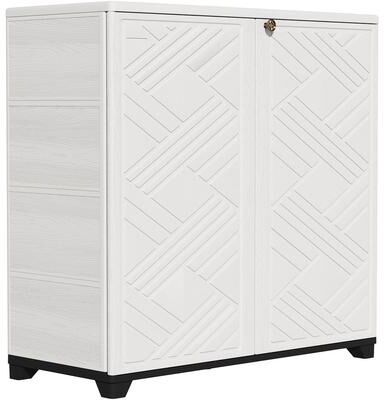
/ 33.5 In Outdoor Storage Cabinet, Patio Shed for Brooms, Trash Bins, Gardening Tools, Pool Supplies,Household Organization1. Versatile Storage Solution for Indoor and Outdoor Spaces Designed to meet a variety of storage needs, this cabinet provides a convenient place for organizing brooms, mops, gardening tools, grilling...272,99 $*Shipping: 0,00 $Secure redirect to the provider
-
What are examples of damped oscillations?
Examples of damped oscillations include a swinging pendulum in a viscous fluid, a car's suspension system responding to bumps on the road, and the motion of a spring-mass system with air resistance. In each case, the oscillations gradually decrease in amplitude over time due to the dissipative forces present, such as friction or air resistance. The damping effect causes the system to eventually come to rest at its equilibrium position. **
-
How can sinusoidal oscillations be modeled?
Sinusoidal oscillations can be modeled using mathematical equations that describe the amplitude, frequency, and phase of the oscillation. The most common way to model sinusoidal oscillations is through a sine or cosine function, such as y = A*sin(2πft + φ), where A is the amplitude, f is the frequency, t is the time, and φ is the phase shift. By adjusting these parameters, we can accurately represent the behavior of sinusoidal oscillations in various systems and phenomena. Additionally, sinusoidal oscillations can also be modeled using differential equations in the context of dynamic systems analysis. **
-
What are the trigonometric functions in oscillations?
In oscillations, the trigonometric functions commonly used are sine and cosine functions. These functions describe the relationship between the angle of rotation and the position of an object undergoing oscillatory motion. The sine function represents the vertical component of the motion, while the cosine function represents the horizontal component. By using these trigonometric functions, we can analyze and predict the behavior of oscillatory systems. **
-
Does a wave consist of multiple oscillations?
Yes, a wave consists of multiple oscillations. In physics, a wave is a disturbance that travels through a medium, transferring energy without transferring matter. This disturbance causes particles in the medium to oscillate back and forth, creating a pattern of repeated motion. Therefore, a wave is made up of multiple oscillations as it propagates through the medium. **
* All prices are inclusive of VAT and, if applicable, plus shipping costs. The offer information is based on the details provided by the respective shop and is updated through automated processes. Real-time updates do not occur, so deviations can occur in individual cases. ** Note: Parts of this content were created by AI.