Buy procement.eu ?
We are moving the project
procement.eu .
Are you interested in purchasing the domain
procement.eu ?
domain@kv-gmbh.de · 0541-91531010
Buy procement.eu ?
Is a trolley similar to a crane?
While both a trolley and a crane are used for lifting and moving heavy objects, they are not the same. A trolley is typically a small wheeled cart used for transporting goods along tracks or overhead beams, while a crane is a larger, more complex machine designed for lifting and moving heavy loads in construction or industrial settings. Cranes have a greater lifting capacity and range of motion compared to trolleys, which are more limited in their capabilities. **
Despite the load, the hoisting rope hangs through the tower crane with trolley.
Despite the load, the hoisting rope hangs through the tower crane with trolley because it is designed to support heavy weights and move them vertically. The trolley allows the rope to move horizontally along the jib of the crane, enabling the load to be positioned precisely. This setup ensures that the load can be lifted, lowered, and moved with stability and control. **
Similar search terms for MSW-Crane-Trolley
Top-Angebote
Products related to MSW-Crane-Trolley:
-
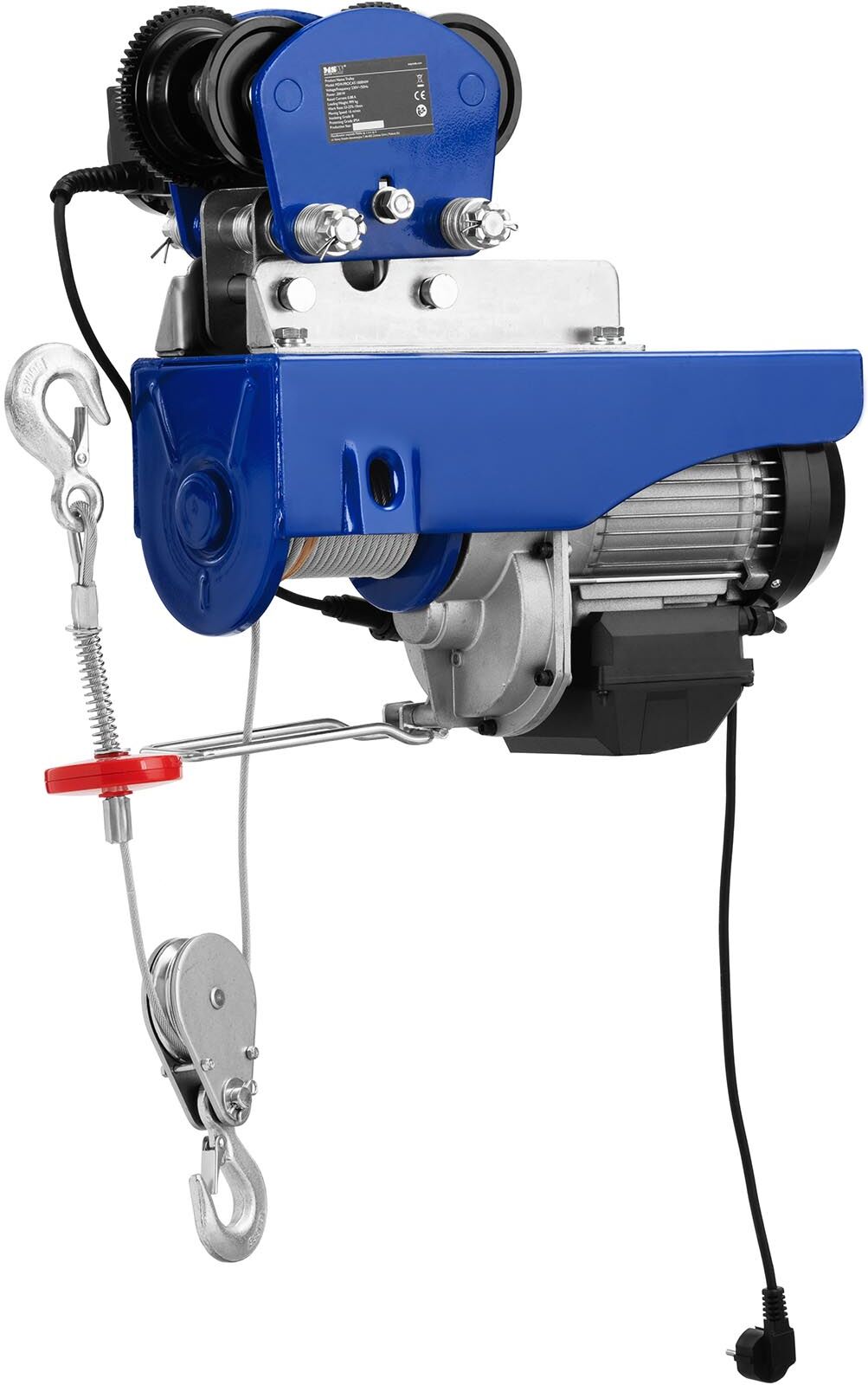
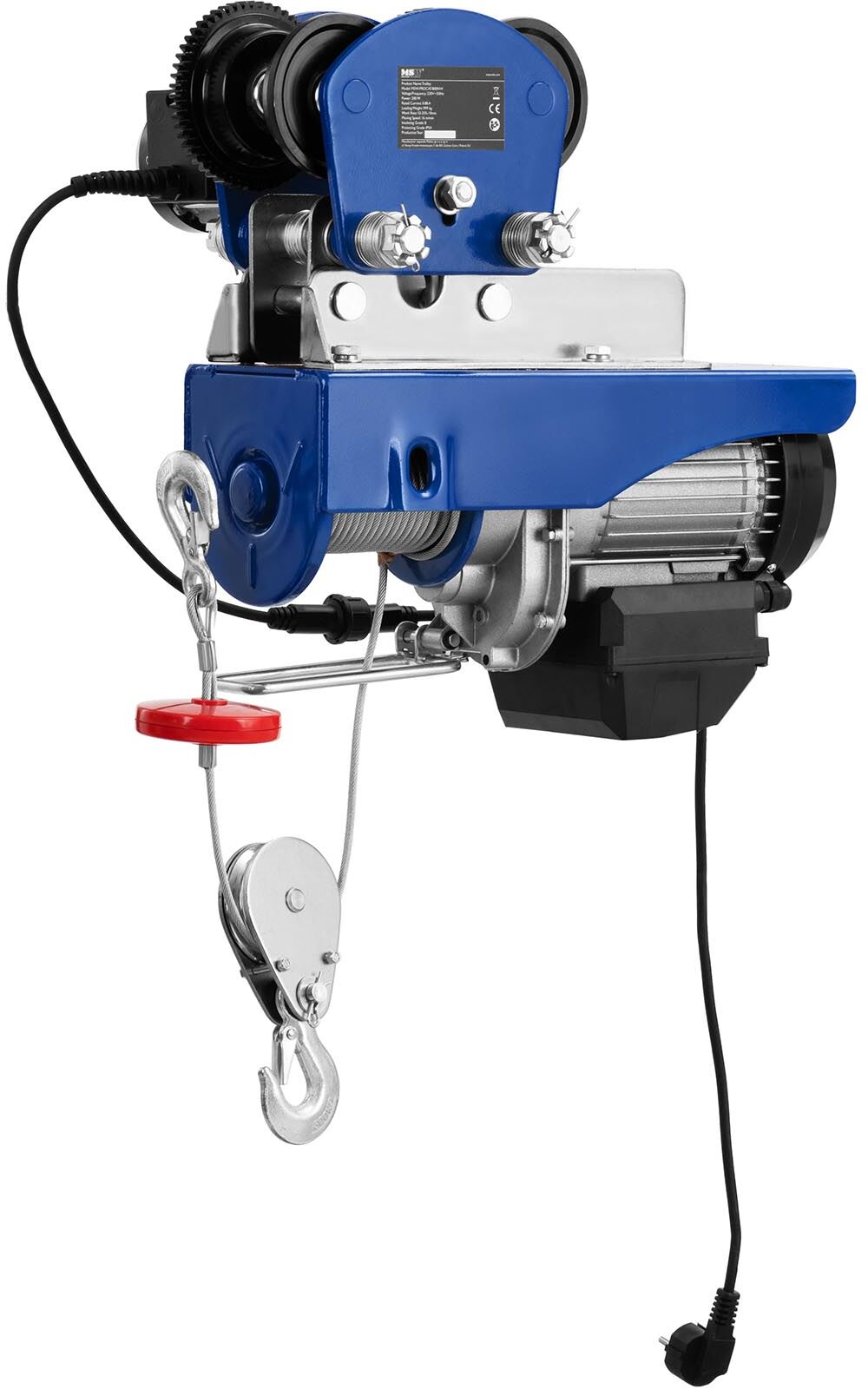
MSW Electric Trolley Hoist - 800 kg - remote control MSW-PROCAT-800NWNot only want to lift loads with a wire rope hoist or chain hoist, but you also need to transport them? Then use the electric trolley hoist with 12 m long steel cable from MSW! Thanks to a powerful motor and a smooth rolling chassis, transporting heavy loads is a breeze. The durable trolley is ideal for professional use in factories, industry, recycling yards or shipyards and wherever heavy loads have to be moved. It is suitable for steel beams with a width of 68 - 110 mm. The electric trolley hoist scores with strong performance values: The 1350 W strong motor lifts loads of up to 400 kg with 8 m/min to a height of up to 12 m. The 12m long, high-quality steel cable with a diameter of 5.1 mm ensures maximum load capacity. With the help of the sliding undercarriage, the trolley also allows you to transport it over a curved route, as long as the curve radius has a minimum of 1 m. The sliding undercarriage has a speed of 0.96 km/h. When the deflection roller is inserted, the lifting height is halved to 6 m and the lifting speed is halved to 4 m/min. At the same time, the load capacity of the wire rope hoist increases to 800 kg and allows heavy loads to be lifted. This means that the rope hoist has twice the tractive force when using the deflection pulley. The trolley up to 800 kg can be controlled at the touch of a button using the remote control supplied. Thanks to the sophisticated safety function, this model automatically stops any lifting or lowering operation when the power supply is interrupted. Awarded protection class IP54 Protection class, the electric wire rope hoist is also protected against the ingress of dirt or water355,00 £*Shipping: 0,00 £Secure redirect to the provider
-
What is the trolley problem or the trolley dilemma?
The trolley problem, also known as the trolley dilemma, is a thought experiment in ethics and moral philosophy. It presents a scenario where a person must decide whether to divert a runaway trolley onto a track where it will hit and kill one person, or do nothing and allow it to continue on its current path where it will hit and kill five people. The dilemma raises questions about moral responsibility, the value of individual lives, and the ethical implications of making difficult decisions in situations where harm is inevitable. **
-
Which workshop trolley?
The workshop trolley that would be most suitable for your needs depends on the specific requirements of your workshop. Consider factors such as the size of the trolley, the weight capacity, the number and type of drawers or shelves, and the overall durability. Additionally, think about whether you need the trolley to be mobile or if it will primarily stay in one location. Once you have a clear understanding of your workshop's needs, you can choose a trolley that best fits those requirements. **
-
What is the difference between a portal crane and a bridge crane?
A portal crane is a type of crane that is mounted on a structure with legs on either side of the area it serves, allowing it to move along a fixed track. On the other hand, a bridge crane is a type of crane that is mounted on an overhead bridge structure, allowing it to move along the length of the bridge. The main difference between the two is the way they are mounted and move within their respective working areas. **
-
What tools, materials, and equipment do teachers work with?
Teachers work with a variety of tools, materials, and equipment in their daily work. Some common tools include whiteboards, markers, and projectors for delivering lessons. Materials such as textbooks, worksheets, and manipulatives are used to support student learning. Equipment like computers, printers, and audio-visual devices are also essential for creating engaging lessons and activities. Overall, teachers rely on a combination of traditional and modern tools to effectively educate their students. **
Can a crane tip over?
Yes, a crane can tip over if it is not properly set up or if it is overloaded. Factors such as strong winds, uneven ground, or operator error can also contribute to a crane tipping over. To prevent this, cranes must be set up on stable ground, have proper counterweights, and be operated by trained personnel following safety guidelines. Regular maintenance and inspections are also essential to ensure the crane's stability and prevent accidents. **
Why does a crane honk?
A crane honks as a form of communication with other cranes in the area. It can be used to establish territory, signal danger, or attract a mate. The honking sound is loud and carries over long distances, making it an effective way for cranes to communicate with each other in their natural habitat. **
Top-Angebote
Products related to MSW-Crane-Trolley:
-
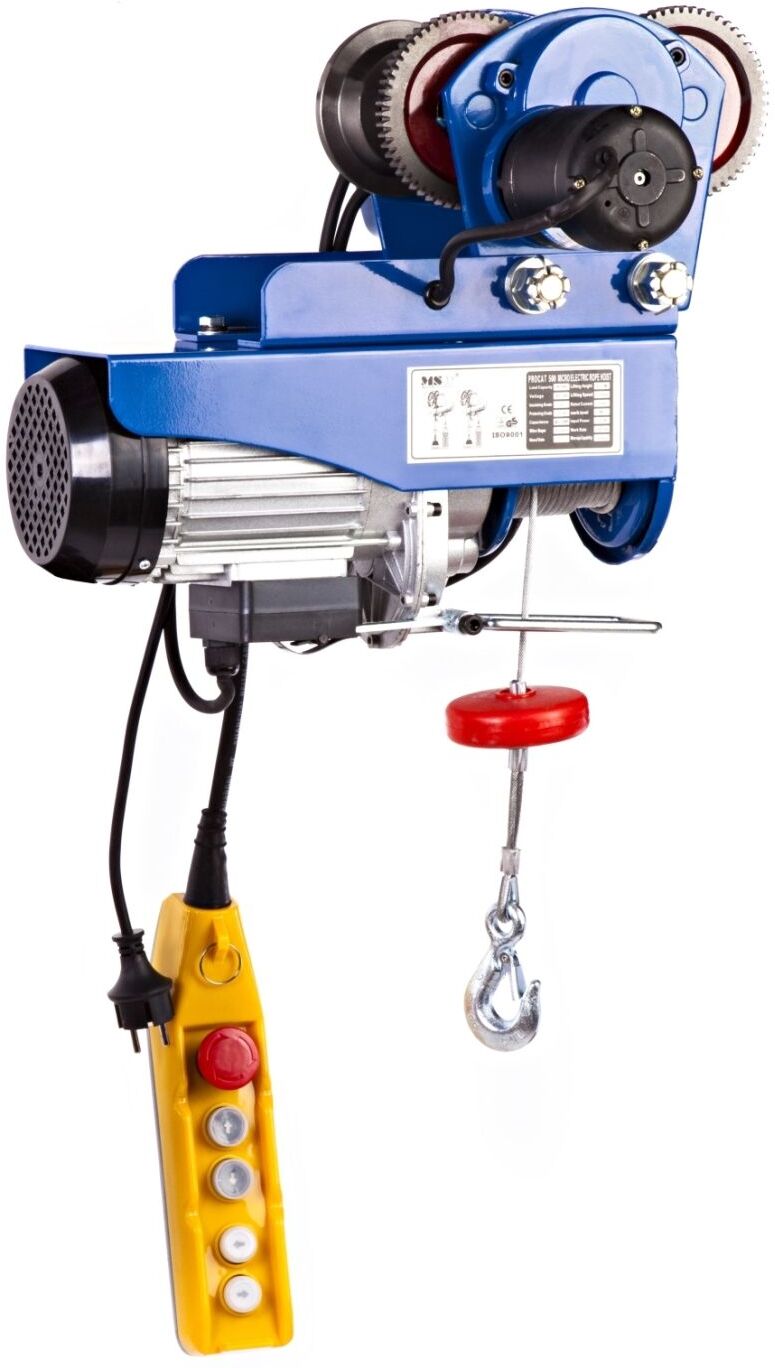
MSW Crane Trolley - 500 kg PROCAT 500Are you looking for a sturdily constructed and reliable trolley for your warehouse? Then we have the right solution for you - the inexpensive PROCAT 500 trolley with electric cable from MSW. The professional trolley was developed for professional workers and is particularly suitable for large warehouses or closed spaces. The hoist has a 12 m stable steel rope with a pulling force of 250 kg. With the pulley, the traction force doubles to 500 kg. You can transport various heavy objects from one storage place to the next without any problems. When inserting the pulley, the lifting height is reduced by half to 6 m and the lifting speed goes to 4 m/min from the previous 8 m/min. The lowering speed is 8 m/min and halved to 4 m / min when using the pulley. Due to the load hook, the load is always fixed to the 4,2 mm thick steel cable. The solid CK 45 steel cable, which is not susceptible to torsion, is wear-resistant and extremely durable. The overload protection guarantees that the trolley works reliably and efficiently for a long time, and the 900 watt engine will not overheat. The sliding chassis of the trolley allows you to move it through a curvy territory as long as the turn radius is at least 1 m. The sliding chassis has a speed of 16 m/min. An electromagnetic braking system ensures quiet operation and holds the load without effort. The deflection hook can be rotated by 360 degrees, allowing for an easier access to the cargo from all sides. The cable is controlled by a two cable remote controls, which each has a length of 1.45 m for a more comfortable operation. Another highlight is the attached strain relief, which ensures that you can safely work with your trolley at any time. The cables of the remote controls are spared, which further increases the already long service life The trolley PROCAT 500 is mounted onto a steel girder with a width of 68 - 94 mm and a height of at least 110 mm. You can use a wide flange, I-beam or double T-beam for a steel profile. The high-quality trolley from MSW removes all obstacles for the transportation of large goods.232,00 £*Shipping: 0,00 £Secure redirect to the provider
-
MSW Electric Trolley Hoist - 1000 kg - remote control MSW-PROCAT-1000NWNot only want to lift loads with a wire rope hoist or chain hoist, but you also need to transport them? Then use the electric trolley hoist with 12 m long steel cable from MSW! Thanks to a powerful motor and a smooth rolling chassis, transporting heavy loads is a breeze. The durable trolley is ideal for professional use in factories, industry, recycling yards or shipyards and wherever heavy loads have to be moved. It is suitable for steel beams with a width of 68 - 110 mm. The electric trolley hoist scores with strong performance values: The 1600 W strong motor lifts loads of up to 500 kg with 8 m/min to a height of up to 12 m. The 12m long, high-quality steel cable with a diameter of 5.6 mm ensures maximum load capacity. With the help of the sliding undercarriage, the trolley also allows you to transport it over a curved route, as long as the curve radius has a minimum of 1 m. The sliding undercarriage has a speed of 0.96 km/h. When the deflection roller is inserted, the lifting height is halved to 6 m and the lifting speed is halved to 4 m/min. At the same time, the load capacity of the wire rope hoist increases to 1000 kg and allows heavy loads to be lifted. This means that the rope hoist has twice the tractive force when using the deflection pulley. The trolley up to 1000 kg can be controlled at the touch of a button using the remote control supplied. Thanks to the sophisticated safety function, this model automatically stops any lifting or lowering operation when the power supply is interrupted. Awarded protection class IP54 Protection class, the electric wire rope hoist is also protected against the ingress of dirt or water473,00 £*Shipping: 0,00 £Secure redirect to the provider
-
MSW Electric Trolley Hoist - 800 kg - remote control MSW-PROCAT-800NWNot only want to lift loads with a wire rope hoist or chain hoist, but you also need to transport them? Then use the electric trolley hoist with 12 m long steel cable from MSW! Thanks to a powerful motor and a smooth rolling chassis, transporting heavy loads is a breeze. The durable trolley is ideal for professional use in factories, industry, recycling yards or shipyards and wherever heavy loads have to be moved. It is suitable for steel beams with a width of 68 - 110 mm. The electric trolley hoist scores with strong performance values: The 1350 W strong motor lifts loads of up to 400 kg with 8 m/min to a height of up to 12 m. The 12m long, high-quality steel cable with a diameter of 5.1 mm ensures maximum load capacity. With the help of the sliding undercarriage, the trolley also allows you to transport it over a curved route, as long as the curve radius has a minimum of 1 m. The sliding undercarriage has a speed of 0.96 km/h. When the deflection roller is inserted, the lifting height is halved to 6 m and the lifting speed is halved to 4 m/min. At the same time, the load capacity of the wire rope hoist increases to 800 kg and allows heavy loads to be lifted. This means that the rope hoist has twice the tractive force when using the deflection pulley. The trolley up to 800 kg can be controlled at the touch of a button using the remote control supplied. Thanks to the sophisticated safety function, this model automatically stops any lifting or lowering operation when the power supply is interrupted. Awarded protection class IP54 Protection class, the electric wire rope hoist is also protected against the ingress of dirt or water355,00 £*Shipping: 0,00 £Secure redirect to the provider
-
Is a trolley similar to a crane?
While both a trolley and a crane are used for lifting and moving heavy objects, they are not the same. A trolley is typically a small wheeled cart used for transporting goods along tracks or overhead beams, while a crane is a larger, more complex machine designed for lifting and moving heavy loads in construction or industrial settings. Cranes have a greater lifting capacity and range of motion compared to trolleys, which are more limited in their capabilities. **
-
Despite the load, the hoisting rope hangs through the tower crane with trolley.
Despite the load, the hoisting rope hangs through the tower crane with trolley because it is designed to support heavy weights and move them vertically. The trolley allows the rope to move horizontally along the jib of the crane, enabling the load to be positioned precisely. This setup ensures that the load can be lifted, lowered, and moved with stability and control. **
-
What is the trolley problem or the trolley dilemma?
The trolley problem, also known as the trolley dilemma, is a thought experiment in ethics and moral philosophy. It presents a scenario where a person must decide whether to divert a runaway trolley onto a track where it will hit and kill one person, or do nothing and allow it to continue on its current path where it will hit and kill five people. The dilemma raises questions about moral responsibility, the value of individual lives, and the ethical implications of making difficult decisions in situations where harm is inevitable. **
-
Which workshop trolley?
The workshop trolley that would be most suitable for your needs depends on the specific requirements of your workshop. Consider factors such as the size of the trolley, the weight capacity, the number and type of drawers or shelves, and the overall durability. Additionally, think about whether you need the trolley to be mobile or if it will primarily stay in one location. Once you have a clear understanding of your workshop's needs, you can choose a trolley that best fits those requirements. **
Similar search terms for MSW-Crane-Trolley
-
What is the difference between a portal crane and a bridge crane?
A portal crane is a type of crane that is mounted on a structure with legs on either side of the area it serves, allowing it to move along a fixed track. On the other hand, a bridge crane is a type of crane that is mounted on an overhead bridge structure, allowing it to move along the length of the bridge. The main difference between the two is the way they are mounted and move within their respective working areas. **
-
What tools, materials, and equipment do teachers work with?
Teachers work with a variety of tools, materials, and equipment in their daily work. Some common tools include whiteboards, markers, and projectors for delivering lessons. Materials such as textbooks, worksheets, and manipulatives are used to support student learning. Equipment like computers, printers, and audio-visual devices are also essential for creating engaging lessons and activities. Overall, teachers rely on a combination of traditional and modern tools to effectively educate their students. **
-
Can a crane tip over?
Yes, a crane can tip over if it is not properly set up or if it is overloaded. Factors such as strong winds, uneven ground, or operator error can also contribute to a crane tipping over. To prevent this, cranes must be set up on stable ground, have proper counterweights, and be operated by trained personnel following safety guidelines. Regular maintenance and inspections are also essential to ensure the crane's stability and prevent accidents. **
-
Why does a crane honk?
A crane honks as a form of communication with other cranes in the area. It can be used to establish territory, signal danger, or attract a mate. The honking sound is loud and carries over long distances, making it an effective way for cranes to communicate with each other in their natural habitat. **
* All prices are inclusive of VAT and, if applicable, plus shipping costs. The offer information is based on the details provided by the respective shop and is updated through automated processes. Real-time updates do not occur, so deviations can occur in individual cases. ** Note: Parts of this content were created by AI.